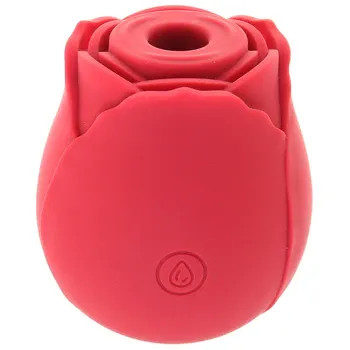
What's Actually in Your Rose? A UK Shopper's Guide to Silicone, TPE and Vague Labels
Photo: Siarhei V, CC BY-SA 4.0, via Wikimedia Commons
Rose vibrator product pages are fond of reassuring language. Body-safe. Skin-friendly. Premium feel. Phthalate-free. These phrases are designed to make you feel good about clicking buy, and some of them mean something useful. But when you are spending your own money on a private product, the material line matters more than the mood board.
This is not a chemistry lesson and it is not a warning label. It is a shopper's guide to the words UK buyers should look for, the words that should make them pause, and the practical difference between silicone, TPE and the vague category often called jelly.
Body-safe is a mood, not a material spec
In the adult toy market, body-safe is not a single regulated standard that appears on every product in the same way. It is a marketing phrase. A product can be described as body-safe while still being made from a porous material, or from a blend that the seller does not fully explain. That does not automatically make it dangerous, but it does mean the phrase is not enough on its own.
A better question is simpler: what is the actual material, and how specific is the seller willing to be? If the product page says only body-safe silicone blend and nothing else, you have learned very little. If it names platinum-cure silicone or 100% silicone, you have something to work with.
Silicone: the useful baseline
Silicone is the material most Rose shoppers will see recommended, and for good reason. Good-quality silicone is non-porous, tends to feel smooth rather than tacky, and is easier to clean thoroughly than porous materials. It also holds its shape well, which matters for a vibrator with a shaped head and a flexible body.
Not all silicone is equal. Platinum-cure silicone is generally considered the higher-grade option, while peroxide-cure silicone is also used in sex toys. A product described as silicone blend or silicone-like may contain other materials, and that is where labels get slippery. If a seller cannot tell you whether the insertable part is pure silicone, treat that as a missing detail rather than a mysterious upgrade.
Silicone is not automatically indestructible. It can attract lint, it can be marked by rough storage, and it should still be cleaned properly. But as a baseline material, it is the one that makes the least trouble for most buyers.
TPE and jelly: where the bargain gets complicated
TPE, or thermoplastic elastomer, is common in cheaper toys. It can feel soft and squishy, and it often costs less than silicone. The trade-off is porosity. TPE has a structure that can harbour moisture and bacteria more readily than silicone, which means it is harder to clean thoroughly and harder to keep fresh over time.
Jelly is an even vaguer term. It may refer to a PVC-based material, a TPE blend or something else entirely. Jelly toys can have a strong smell, a tacky surface and a shorter useful life. Some shoppers use condoms with porous toys as an extra barrier, but that is a workaround rather than a fix. If a Rose is made from a porous material, the honest expectation is that it will need replacing sooner.
That does not mean every cheaper toy is a con. It means the price difference is not only about the motor. You are also buying a different material with different cleaning limits and a different lifespan.
Read the label like a shopper, not a poet
Product pages should tell you the material of the insertable part, not just the handle or the packaging. Look for a clear statement such as 100% silicone, platinum-cure silicone or TPE. Be cautious of phrases like silicone TPE, which contradict each other, or luxury jelly, which tells you almost nothing.
Check for details that suggest the seller knows their product: a material breakdown, care instructions that match the material, a clear returns policy and a UK-facing support contact. In the UK, distance-selling rules give you rights when you buy online, but sealed hygiene items can be treated differently. Read the returns policy before you order, especially if you are buying a material you have not tried before.
Also look at the seams and finish. A well-made silicone Rose should feel smooth and consistent. A cheaper moulded toy may have visible seams, a strong plastic smell or a surface that feels oily. Those are not moral failings, but they are clues about what you are buying.
Storage and cleaning implications that actually differ
Basic care is basic care: clean it, dry it, store it somewhere sensible. The material changes the details. Silicone can be washed and dried without much drama, but it should still be stored away from sharp objects and direct sunlight. TPE and jelly need more attention because they are porous. They should be dried thoroughly, kept separate from other toys and checked regularly for tackiness, splits or changes in smell.
Porous materials can also leach oils or colour over time, so storing them against silicone or light-coloured fabrics is not ideal. A simple pouch per toy is less about aesthetics and more about stopping materials from affecting each other. If a TPE toy starts to feel sticky no matter how you clean it, that is usually a sign the material is ageing rather than a cleaning failure.
When cheap becomes a false economy
A cheaper Rose can be a sensible first purchase if you are curious and not ready to spend more. The false economy appears when the low price comes with a material that cannot be cleaned properly, a motor that dies in a few months or a seller who disappears when you have a question.
A good silicone Rose may cost more upfront, but it is more likely to survive regular use, clean up reliably and hold its shape. If you are buying for the long term, the material is not a minor detail. It is the part of the product you cannot upgrade later.
The practical rule is not to fear cheaper materials, but to know what you are buying. If a product page will not name the material clearly, that is not a mystery to solve. It is a reason to keep looking.